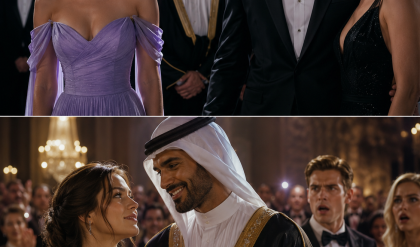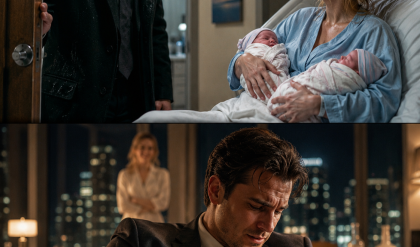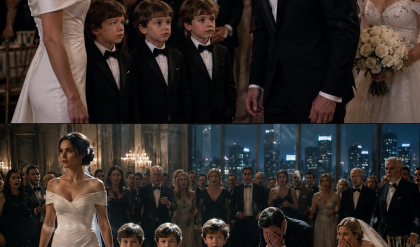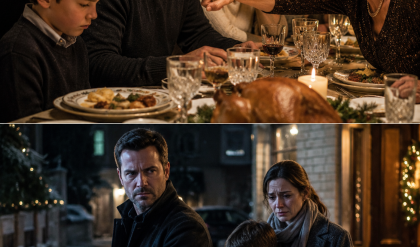
“The way you review something before you decide whether it should survive.”
Another pause.
Then Arthur said, “Understood.”
Mina looked at her husband one last time through the glittering room.
“He told me if he divorced me, I’d walk away with nothing,” she said. “He said his prenup was ironclad.”
For the first time, Arthur Vance laughed. It was quiet, humorless, almost sad.
“He said that to my daughter?”
“Yes.”
“Then Mr. Blackwood should learn to read what he signs.”
Mina wiped one tear before it could fall.
“Come home tonight,” Arthur said. “I’ll handle the rest.”
The next morning, Damien woke with a hangover and a phone full of disaster.
His lead bank was unavailable. Holloway Capital would not return calls. Two investors had requested emergency withdrawal provisions. A regulator had asked for records connected to three previous acquisitions.
By nine-thirty, he was pacing the kitchen of his Upper East Side penthouse, barefoot on white marble, shouting into a phone no one wanted to answer.
Mina sat at the breakfast table in linen pants and a cream sweater, reading the financial pages.
That infuriated him most of all.
“How can you sit there drinking tea?” he snapped.
She turned a page. “It’s coffee.”
“My company is under attack.”
“Maybe your company is overleveraged.”
He froze.
Then he laughed.
It was not a kind sound.
“Listen to you,” he said. “Overleveraged. Did you learn that word from a podcast?”
Mina folded the newspaper.
“I read the Sterling prospectus,” she said.
Damien stared at her.
“You read my prospectus?”
“It was on your desk.”
“And what exactly did you understand?”
“Enough to know you were using short-term debt to chase a long-term asset you couldn’t afford if one lender stepped back.”
His face darkened.
For a moment, he looked less like a billionaire and more like a frightened boy who had been caught cheating on an exam.
Then the cruelty returned.
“You are my wife,” he said. “Not my analyst.”
“No,” Mina said softly. “I’m definitely not your analyst.”
He stepped closer.
“Do you know what you were when I met you? A gallery assistant making barely enough to afford rent. I brought you into this world. I gave you this apartment. I gave you my name.”
Mina looked around the cold glass penthouse, the one he had chosen after laughing at her dream of a warm brownstone in the West Village.
“You gave me a place to be lonely in,” she said.
His face twisted.
“You ungrateful little—”
He stopped himself, but barely.
Then he smiled.
“Fine. Maybe I’ve been too generous. Maybe it’s time you remember the arrangement. If I leave you, you get what you came with.”
Mina stood.
“And what do you think that is?”
“Nothing,” he said. “That was the whole point.”
She nodded slowly.
“I see.”
“No, you don’t.” He leaned in. “You bore me, Mina. You embarrass me. You float around in simple dresses like modesty is a personality. You make me look weak.”
For the first time in their marriage, Mina did not flinch.
“You never needed my help with that,” she said.
The slap of silence after those words was almost physical.
Damien’s hand twitched at his side, but he did not touch her.
Instead, he pointed toward the hall.
“Get out of my sight.”
Mina picked up her coffee cup, carried it to the sink, and poured it out.
Then she walked to the guest room she had quietly made her own six months earlier and locked the door.
Inside, she did not cry.
She opened her laptop.
On the screen, a silver-haired attorney in Geneva appeared beside a senior analyst in London and a woman from Vance Global’s risk office in Chicago.
“Good morning, Ms. Vance,” the attorney said.
Mina straightened her shoulders.
“Where are we?”
“The banks are eager to sell Blackwood Meridian’s debt,” he said. “Very eager.”
“How much?”
“All of it.”
“And Sterling?”
“Your father completed the purchase personally. Cash offer. Clean close. Press release goes out at noon Eastern.”
Mina looked down at her bare left hand.
Her wedding ring was already on the desk beside her.
“Then proceed,” she said.
The attorney nodded. “And Mr. Blackwood?”
Mina’s expression did not change.
“Leave him exactly what his prenup promised,” she said. “Everything that belongs to him.”
Part 2
At 12:01 p.m., Damien Blackwood watched his future disappear in a headline.
Vance Global Holdings acquires Sterling Aeronautics in all-cash deal after rival bid collapses.
He read the words once.
Then again.
Then he threw his glass at the wall.
“Vance?” he whispered.
The name was familiar in the way mountains were familiar. Everyone knew it existed. Nobody thought they could move it.
Vance Global did not chase headlines. It owned ports, satellites, medical patents, energy grids, defense contracts, media companies, and quiet pieces of things people used every day without knowing who profited. It was old American power polished by European discipline. It did not beg banks for leverage.
It paid cash.
Damien’s office phone rang. Then his cell. Then the private line.
Martin called first.
“We’re in default,” he said, nearly crying. “The banks sold the debt.”
“To who?”
Martin was silent.
Damien’s stomach dropped.
“To who, Martin?”
“Vance.”
The word seemed to take all the air from the room.
Then came another call.
A regulator wanted documents.
Then another.
An investor wanted immediate withdrawal.
Then another.
The board wanted an emergency meeting without him.
At 2:17 p.m., Serena called.
For one stupid second, Damien thought she might comfort him.
“Damien,” she said, voice thin. “My father says I can’t be associated with you.”
He gripped the phone. “This is temporary.”
“I don’t think it is.”
“You know what I’ve done for your family?”
“That’s actually the problem,” she said. “The lawyers are looking at the fund transfers.”
He went still.
“Serena.”
“I’m sorry,” she whispered, but she sounded more frightened than sorry. “Don’t call me again.”
The line died.
Damien stood in the middle of his home office, breathing hard.
He needed someone smaller to blame.
“Mina!” he shouted.
No answer.
He stormed down the hall and threw open the guest room door.
The room was empty.
Her clothes were gone. Her books were gone. The small framed photograph of her mother was gone from the bedside table.
Only two things remained.
Her platinum wedding band.
And a copy of their prenuptial agreement.
For a moment, Damien simply stared.
Then he laughed, harsh and wild.
“She left,” he said. “Of course she left. Little coward.”
But the laugh faded.
He picked up the prenup.
Bride: Mina Elaine Vance.
His breath stopped.
No.
He read it again.
Mina Elaine Vance.
He sat down slowly on the edge of the bed.
In three years, he had never asked about her father beyond the simple lie she had offered: “He travels a lot for work.”
He had never asked where she went to college.
He had never asked why bankers’ wives greeted her with odd hesitation at charity events.
He had never asked why she could identify a fake Rothko faster than an auction specialist, why she spoke French with hotel managers in Paris like a native, why older men in expensive suits sometimes looked at her like they were trying to remember where they had seen her face.
He had never asked because he thought he already knew everything worth knowing.
Gallery assistant.
Pretty.
Quiet.
Useful when needed.
Invisible when not.
His private line rang.
He answered with a hand that had begun to shake.
“Mr. Blackwood,” a polished voice said. “My name is Julian Hayes. I represent Arthur Vance. Mr. Vance will meet you tomorrow morning at your office at nine.”
Damien closed his eyes.
Arthur Vance.
Not a coincidence.
Not possible.
“What does he want?” Damien asked.
“A transition discussion.”
“Transition?”
“Yes.”
“Am I being offered terms?”
A pause.
“No, Mr. Blackwood. You are being informed of them.”
The call ended.
Damien did not sleep.
By morning, Blackwood Meridian Capital looked less like a fortress and more like a crime scene waiting for yellow tape.
Employees whispered near dark monitors. Assistants packed personal items into tote bags. Traders who used to bark into phones now stared at their screens as if silence might save them.
Damien arrived at 7:40 a.m. wearing yesterday’s suit and a new tie, because he believed appearances still mattered.
His reflection in the elevator doors told a different story.
At 8:58, Martin entered his office, gray-faced.
“The U.S. Attorney’s people are downstairs,” he said. “They have boxes.”
Damien straightened the papers on his desk.
“Let them wait.”
“Damien—”
“He’s coming to buy us,” Damien said. “Vance didn’t take all this trouble to burn the assets. He’ll want my instincts. Men like him respect aggression.”
Martin looked at him with something like pity.
At exactly nine, the private elevator opened.
Arthur Vance entered without hurry.
He was tall, silver-haired, dressed in a dark suit that did not need to announce its cost. Four attorneys followed him. Behind them came two security men who looked like former federal agents and did not blink much.
Damien stepped forward with a smile that had once closed billion-dollar deals.
“Mr. Vance,” he said, extending his hand. “An honor.”
Arthur looked at the hand.
Then at Damien.
He did not take it.
“Mr. Blackwood.”
The insult landed quietly.
Damien withdrew his hand.
“Please,” he said. “Sit. We have a lot to discuss.”
Arthur walked past him to the window overlooking Park Avenue.
“I’ve seen many men build towers from smoke,” Arthur said. “Most at least understand the smoke is not stone.”
Damien’s smile faltered. “I’m not sure I follow.”
“You rarely did, from what I understand.”
One attorney opened a folder.
“As of seven this morning,” she said, “Vance Global Holdings acquired one hundred percent of Blackwood Meridian’s outstanding senior debt and a controlling interest in its secured obligations.”
Martin made a small sound.
Damien stared. “You bought my debt.”
“Yes,” Arthur said. “All of it.”
“You can’t just—”
“We can,” the attorney said. “And we did.”
Damien looked at Arthur. “This is about Sterling.”
Arthur’s face remained calm. “No.”
“Then what is this?”
Arthur turned from the window.
Only then did Damien see Mina’s eyes in him. Same gray. Same stillness. Same ability to make silence feel like a verdict.
“This,” Arthur said, “is about my daughter.”
The room seemed to tilt.
Damien tried to speak, but nothing came out.
Arthur stepped closer.
“My daughter came to New York because she wanted a life without the Vance name crushing every conversation before it began. She wanted to know if anyone could love her without calculating her value.”
“I loved Mina,” Damien said quickly.
Arthur’s expression did not change, but something colder entered his eyes.
“No. You enjoyed her when she made you feel authentic. Then you resented her when she failed to decorate your vanity properly.”
Damien swallowed.
“I didn’t know who she was.”
“That,” Arthur said, “is the most honest and most damning thing you have said.”
One of the lawyers placed the prenup on Damien’s desk.
Damien seized on it like a drowning man grabbing driftwood.
“The agreement protects me,” he said. “It says she gets nothing from Blackwood Meridian.”
“Yes,” the lawyer said. “It does.”
Hope flickered.
“She cannot touch my company.”
“She has no interest in touching your company,” Arthur said. “It is diseased.”
Damien frowned.
The lawyer continued. “The agreement states each party retains all assets brought into the marriage and all assets connected to family trusts or inheritances.”
“Exactly,” Damien said.
“Mr. Blackwood,” the lawyer said gently, “you brought Blackwood Meridian into the marriage. Therefore, you retain responsibility for it. Its debts. Its liabilities. Its legal exposure.”
Damien’s hope faltered.
“Mina,” the lawyer continued, “brought her personal estate, trust interests, and inheritance protections into the marriage. Those remain hers.”
Damien’s lips parted.
“What personal estate?”
Arthur almost smiled.
“Mina was the sole beneficiary of the Vance family trust before she met you.”
“How much?” Damien whispered.
No one answered.
He understood then that if he had to ask, the number was beyond anything he could use.
Arthur walked closer.
“She graduated from Wharton before twenty-one. She earned her master’s in economics in London. She ran our Geneva commodities desk under her mother’s name and outperformed every man who thought she had been hired for decoration. She speaks four languages. She reads risk faster than most men read menus.”
Damien’s face drained of color.
“And you,” Arthur said, voice low now, “told her to go talk to someone’s wife.”
Martin sat down heavily on the sofa.
Damien gripped the desk. “I can apologize.”
“No.”
“I’ll give her whatever she wants.”
“You have nothing she wants.”
“I’m her husband.”
Arthur’s eyes sharpened.
“You were a test,” he said. “A painful one. But a useful one.”
Damien’s voice cracked. “You can’t destroy me because of a marriage.”
“I did not destroy you,” Arthur said. “You built a fraudulent empire on borrowed money and arrogance. I merely purchased the paperwork.”
The attorney set another document on the desk.
“Effective immediately, you are removed from all operational authority. Your office, accounts, personal assets pledged against corporate obligations, aircraft, vehicles, and residences are under creditor control pending liquidation and investigation.”
“My apartment?”
“Secured.”
“My cars?”
“Secured.”
“My accounts?”
“Frozen.”
Damien looked around his office.
His office.
His name on the glass.
His skyline.
His empire.
Suddenly all of it looked rented.
“No,” he said.
Arthur nodded once to the security men.
“Mr. Blackwood is no longer authorized to remain on these premises.”
Damien staggered backward.
“Wait. Arthur. Please.”
Arthur’s face hardened at the use of his first name.
“Do not.”
“Mina,” Damien gasped. “Let me talk to Mina.”
For the first time, Arthur’s control almost broke.
“You had three years.”
The security men took Damien by the arms.
He fought them, first with words, then with panic.
“This is my company!” he shouted as they dragged him from the office. “My name is on the door!”
“Not anymore,” Arthur said.
The bullpen fell silent as Damien was pulled past the employees who had once feared him.
Then the elevator opened.
Mina stepped out.
She wore a white tailored suit. Her hair was pulled back. No pearls. No soft colors. No attempt to be smaller than she was.
The room changed when she entered.
Damien stopped struggling.
“Mina,” he pleaded. “Baby, please. Tell them this is a mistake.”
She looked at him.
For three years, she had wanted him to see her.
Now he finally did.
And it was too late.
“I love you,” he said. “I swear I love you.”
Mina’s expression remained still.
“No,” she said quietly. “You loved the version of me that made you feel powerful.”
The elevator doors behind him began to close.
“Mina!”
She turned away before the doors sealed him in.
Then she walked into the office that had once belonged to him and faced the terrified room.
“My name is Mina Vance,” she said. “As of this morning, Blackwood Meridian Capital is being dissolved and restructured under Vance Global Holdings.”
No one moved.
“Some of you knew what he was doing,” she continued. “Some of you suspected and stayed silent. Some of you were used by him and are afraid that fear makes you guilty.”
Her eyes swept the room.
“Here is the truth. Anyone who committed crimes will face consequences. Anyone who helps expose them will be protected by this company to the fullest legal extent possible. Anyone who wants to leave will receive fair severance. Anyone who stays will work harder, cleaner, and under rules that do not bend for ego.”
A young analyst in the back slowly raised his hand.
“Ms. Vance,” he said, voice shaking. “I have files. Copies. I didn’t know who to give them to.”
Mina nodded.
“Give them to Mr. Hayes. And thank you for choosing the truth before it was too late.”
Another hand rose.
Then another.
Then five more.
Arthur watched from the side of the room.
He had come to bury a company.
His daughter had begun building one.
Downstairs, Damien Blackwood was shoved through the revolving doors of his own building and onto the sidewalk.
His briefcase hit the pavement beside him and burst open. Papers scattered into traffic.
Camera flashes exploded.
“Mr. Blackwood, is it true your wife is Arthur Vance’s daughter?”
“Did Vance Global seize your company?”
“Are you under federal investigation?”
Damien stumbled backward, shielding his face.
“I have no comment.”
A reporter shouted, “Is Mina Vance the new CEO?”
He froze.
Above him, forty-nine floors up, the woman he had dismissed as an accessory stood in his office, under his ceiling, giving orders to his employees.
Damien reached for his phone.
Gone.
His wallet held one black card and twenty-three dollars in cash.
He climbed into a cab anyway.
“Where to?” the driver asked.
Damien opened his mouth.
He had no home to go to.
No office.
No mistress.
No company.
“Just drive,” he said.
The driver looked back after trying the card.
“Card’s declined, man.”
“Run it again.”
“I did.”
Damien stared at him.
“You got cash?”
Twenty-three dollars.
That was all.
The driver sighed. “Then you’re not going far.”
Part 3
Six weeks later, Mina Vance sat in the corner office overlooking Park Avenue, but almost nothing in the room remained from Damien’s reign.
The black glass desk was gone. The chrome chairs were gone. The wall-sized photograph of Damien shaking hands with a senator had been removed and placed in evidence storage.
In their place were warm walnut shelves, real books, soft lamps, green plants, and a painting Mina had loved since childhood: a storm breaking over a field, light pushing through the clouds.
The firm had a new name now.
Vance Strategic Opportunities.
The newspapers loved that.
The silent wife who turned Wall Street inside out.
The heiress hiding in plain sight.
The billionaire’s bride who bought his kingdom before breakfast.
Mina hated most of the headlines, but she understood their usefulness. Public narrative was leverage too. Damien had taught her that by accident.
What he had never understood was that leverage without discipline was just a fall waiting for gravity.
Her first months were brutal.
The federal investigation widened. Former executives turned on one another. Serena Caldwell became a cooperating witness after investigators discovered Damien had moved her family’s money through shell entities without proper disclosure. Martin Hale, trembling and ruined, handed over passwords, meeting notes, and recordings he had kept as insurance.
Mina did not celebrate.
Each discovery made her feel less triumphant and more tired.
It was one thing to defeat cruelty.
It was another to walk through the wreckage and see how many ordinary people had been standing underneath when the ceiling collapsed.
So she did what Damien never would have done.
She paid severance before bonuses.
She protected junior employees who had raised concerns.
She created an anonymous ethics line with authority outside management.
She rebuilt the risk department and promoted the analyst who first came forward, Jason Miller, to lead it.
On a rainy Thursday afternoon, Jason sat across from her with a stack of reports.
“We unwound another eighteen percent of the toxic positions,” he said. “The clean energy fund is oversubscribed. Pension groups are interested.”
Mina nodded. “Good.”
He hesitated.
“What is it?”
“I just…” Jason looked toward the window. “I thought after everything, this place would feel cursed.”
“And?”
“It doesn’t.”
Mina smiled faintly. “That’s because curses require belief. We’re using audits.”
He laughed, nervous but genuine.
After he left, Arthur Vance entered without knocking, carrying two coffees.
“You’re terrifying your staff less this week,” he said.
“I’m improving.”
“You’re becoming your mother.”
That made Mina pause.
Her mother, Eleanor, had died when Mina was twenty. She had been warm where Arthur was controlled, intuitive where he was strategic. She had believed that wealth was not a personality, only a responsibility with better furniture.
“She would have hated all this,” Mina said.
“She would have hated Damien,” Arthur replied.
Mina looked down at her hands.
Arthur’s voice softened. “Do you miss him?”
“No.”
“Do you miss what you wanted him to be?”
That question reached deeper.
Mina turned toward the window.
“I miss the first month,” she said. “The gallery. The rain. The man who asked me about a painting and seemed to actually care about the answer.”
Arthur said nothing.
“I thought I had found someone who saw me without the money,” she continued. “But he didn’t see me. He saw what he needed me to be.”
“That is not your failure.”
“I know.”
But knowing and feeling were not always the same.
Damien’s criminal trial began in early fall.
The press covered every day.
Mina did not attend.
She read summaries only when necessary. Wire fraud. Securities fraud. Market manipulation. Racketeering conspiracy. The list was long and ugly, but none of it surprised her. She had spent years watching him mistake risk for genius and intimidation for leadership.
Once, after a hearing, a reporter caught Damien outside the courthouse.
He had lost weight. His once-perfect hair was dull. His suit was cheap, the shoulders slightly wrong. Without the money around him, he looked smaller than Mina remembered.
“Mr. Blackwood,” the reporter called, “do you have anything to say to Mina Vance?”
Damien stopped.
For once, he did not perform.
He looked into the camera, hollow-eyed.
“Mina,” he said, voice breaking. “I’m sorry. I didn’t know.”
Mina watched the clip alone in her office after everyone had gone home.
I didn’t know.
There it was again.
The excuse and the confession.
He hadn’t known who she was.
He hadn’t known what she brought into the marriage.
He hadn’t known she understood his business.
He hadn’t known she was lonely.
He hadn’t known he was destroying the only real thing he claimed to want.
Mina closed the laptop.
Knowing required attention.
Attention required humility.
Damien had never considered either one useful.
A year after the gala, Mina moved into the West Village brownstone she had wanted all along.
It had uneven floors, creaky stairs, a narrow garden, and a kitchen painted soft green. It was not the largest house she owned. It was not the most valuable. It was the first one that felt like hers.
On the day she moved in, Arthur arrived in a cashmere coat and inspected the old fireplace with suspicion.
“This chimney may be older than the Constitution,” he said.
Mina handed him a mug of coffee. “That’s why I like it.”
“It’s inefficient.”
“It has character.”
“So does a raccoon. I wouldn’t heat my house with one.”
She laughed.
For a moment, standing in the warm little kitchen while rain tapped the windows, Mina felt something loosen in her chest.
Not victory.
Peace.
Damien was convicted three months later on fourteen counts. The judge sentenced him to twenty-five years in federal prison. His name became a warning whispered in conference rooms: don’t build like Blackwood, don’t borrow like Blackwood, don’t lie like Blackwood, don’t underestimate the quiet person in the room.
Mina finalized the divorce shortly afterward.
The hearing lasted less than fifteen minutes.
Per the agreement Damien had once bragged about, Mina kept every asset she had brought into the marriage. Damien kept responsibility for what remained of his empire: debt, judgments, and a legacy so toxic no one wanted to buy even the name.
When the judge asked Mina if she wished to make a statement, she stood.
Damien watched from the defense table in a prison-issued jumpsuit, shackled at the wrists.
She could have humiliated him.
New York would have enjoyed it.
Instead, she looked at the judge.
“No, Your Honor,” she said. “I’m finished.”
Those two words did what revenge never could.
They freed her.
Months passed.
Vance Strategic Opportunities became one of the most respected new firms in the city. Mina was demanding, precise, and almost impossible to impress. She was also fair. People learned quickly that she hated flattery, respected preparation, and remembered the names of assistants.
On Christmas Eve, her staff expected a brief holiday email.
Instead, Mina closed the office at noon, paid bonuses early, and sent a handwritten note to every employee who had helped rebuild the firm.
Jason Miller’s note said: Thank you for choosing courage before certainty.
He kept it framed on his desk.
That evening, Mina hosted dinner at her brownstone.
Arthur came. So did two old friends from the art world, her godfather from the SoHo gallery, and Daniel Mercer, a Columbia literature professor she had been seeing carefully for three months.
Daniel knew exactly who she was.
He had googled her before their first dinner and admitted it immediately.
“I panicked,” he had said. “Then I read three articles, felt underqualified to order wine near you, and considered faking an illness.”
“Why didn’t you?”
“Because you mentioned loving Emily Dickinson in an interview, and I have strong opinions.”
That had been the beginning.
Now he stood in her kitchen badly cutting bread while Arthur watched like a man observing a national security threat.
“That knife is for tomatoes,” Arthur said.
Daniel looked down. “I thought it seemed gentle.”
Mina laughed so hard she had to turn away.
After dinner, snow began falling over the garden.
The guests lingered by the fire. Arthur told a story about Mina at twelve years old correcting a board member’s math during a shareholder retreat. Daniel recited three lines of poetry and then blushed when everyone clapped.
For once, Mina did not feel like she was hiding.
The next morning, a letter arrived from federal prison.
The envelope was thin. The handwriting uneven.
Mina stood in the hallway for a long time before opening it.
Mina,
I don’t know if you’ll read this. I don’t know if I deserve for you to.
They tell me remorse matters in here. I’m not sure I understand remorse yet. I understand regret. Regret is easy. It’s what you feel when the door locks and the world keeps moving without you.
But remorse, I think, is different. Remorse is finally seeing the person you hurt as a person.
I didn’t do that.
I made you small because I was small. I called you simple because I was terrified of anything I couldn’t buy, measure, or control. I thought money made me real. Then I found out you had more of it than I could imagine, and somehow that was not the worst part.
The worst part was realizing you never needed mine.
The worst part was remembering the yellow dress in the gallery and knowing you were real with me. You gave me a chance to be real too.
I threw it away.
I’m not asking for forgiveness. I’m not asking for anything.
I just want to know one thing.
Was any of it real?
Damien
Mina read the letter once.
Then again.
The fire cracked softly in the living room.
Outside, children were laughing on the sidewalk, dragging sleds over thin snow.
She thought of the young man in the gallery, rain in his hair, asking why a painting of a field made him feel homesick for somewhere he had never lived.
She thought of the husband who mocked her clothes.
The man who grabbed her wrist at the gala.
The prisoner who had finally found words too late.
Mina sat at her desk and took out a sheet of cream stationery.
She wrote two words.
It was.
She sealed the envelope before she could change her mind.
A week later, Damien received it in the prison mail room.
He opened it with shaking hands.
For a long time, he stared at the words.
It was.
The truth broke him more completely than the sentence ever had.
Because it meant he had not been tricked.
He had not been hunted from the beginning.
He had not been the victim of some cold heiress playing poor for sport.
He had been loved.
Not for his company.
Not for his name.
Not for the illusion he sold to the world.
For one brief, impossible season, Mina Vance had seen the frightened man behind the billionaire costume and chosen him anyway.
And he had repaid her by becoming the mask.
He sat on the edge of his cot until the guards called lights out.
For the first time in his life, Damien Blackwood understood value.
Not price.
Value.
Back in her brownstone, Mina stood in her garden while snow settled on the iron chairs.
Her phone buzzed.
“Are you ready?” Arthur asked. “Dinner reservation is in thirty minutes.”
“I’m ready,” Mina said.
She looked through the kitchen window at the warm lights inside her own house.
For years, she had tried to become small enough for a man who feared her size.
Now she understood that love should never require disappearance.
She locked the garden door, put on her coat, and stepped into the snowy West Village night—not as a hidden heiress, not as an ignored wife, not as a woman waiting to be seen.
As herself.
And that was more than enough.
THE END